Wednesday, July 13, 2016

For Whites Sensing Decline, Donald Trump Unleashes Words of Resistance

By NICHOLAS CONFESSORE NY TIMES


The chant erupts in a college auditorium in Washington, as admirers of a conservative internet personality shout down a black protester. It echoes around the gym of a central Iowa high school, as white students taunt the Hispanic fans and players of a rival team. It is hollered by a lone motorcyclist, as he tears out of a Kansas gas station after an argument with a Hispanic man and his Muslim friend.

Trump

Trump

Trump

In countless collisions of color and creed, Donald J. Trump’s name evokes an easily understood message of racial hostility. Defying modern conventions of political civility and language, Mr. Trump has breached the boundaries that have long constrained Americans’ public discussion of race.

Mr. Trump has attacked Mexicans as criminals. He has called for a ban on Muslim immigrants. He has wondered aloud why the United States is not “letting people in from Europe.”

His rallies vibrate with grievances that might otherwise be expressed in private: about “political correctness,” about the ranch house down the street overcrowded with day laborers, and about who is really to blame for the death of a black teenager in Ferguson, Mo. In a country where the wealthiest and most influential citizens are still mostly white, Mr. Trump is voicing the bewilderment and anger of whites who do not feel at all powerful or privileged.

But in doing so, Mr. Trump has also opened the door to assertions of white identity and resentment in a way not seen so broadly in American culture in over half a century, according to those who track patterns of racial tension and antagonism in American life.

Dozens of interviews — with ardent Trump supporters and curious students, avowed white nationalists, and scholars who study the interplay of race and rhetoric — suggest that the passions aroused and channeled by Mr. Trump take many forms, from earnest if muddled rebellion to deeper and more elaborate bigotry.

On campuses clenched by unforgiving debates over language and inclusion, some students embrace Mr. Trump as a way of rebelling against the intricate rules surrounding privilege and microaggression, and provoking the keepers of those rules.

Among older whites unsettled by new Spanish-speaking neighbors, or suspicious of the faith claimed by their country’s most bitter enemies, his name is a call to arms.

On the internet, Mr. Trump is invoked by anonymous followers brandishing stark expressions of hate and anti-Semitism, surprisingly amplified this month when Mr. Trump tweeted a graphic depicting Hillary Clinton’s face with piles of cash and a six-pointed star that many viewed as a Star of David.

“I think what we really find troubling is the mainstreaming of these really offensive ideas,” said Jonathan Greenblatt, the national director of the Anti-Defamation League, which tracks hate groups. “It’s allowed some of the worst ideas into the public conversation in ways we haven’t seen anything like in recent memory.”

Mr. Trump declined to be interviewed for this article, and his spokesman declined to comment.

Outside a former aircraft factory in Bethpage, N.Y., not far from a strip of halal butchers and Indian restaurants now known as Little India, a Long Island housewife who gave her name as Kathy Reb finished a cigarette on a spring evening. Nervously, she explained how she had watched the complexion of her suburb outside New York City change. “Everyone’s sticking together in their groups,” she said, “so white people have to, too.”

The resentment among whites feels both old and distinctly of this moment. It is shaped by the reality of demographic change, by a decade and a half of war in the Middle East, and by unease with the newly confident and confrontational activism of young blacks furious over police violence. It is mingled with patriotism, pride, fear and a sense that an America without them at its center is not really America anymore.

In the months since Mr. Trump began his campaign, the percentage of Americans who say race relations are worsening has increased, reaching nearly half in an April poll by CBS News. The sharpest rise was among Republicans: Sixty percent said race relations were getting worse.

And Mr. Trump’s rise is shifting the country’s racial discourse just as the millennial generation comes fully of age, more and more distant from the horrors of the Holocaust, or the government-sanctioned racism of Jim Crow.

Some are elated by the turn. In making the explicit assertion of white identity and grievance more widespread, Mr. Trump has galvanized the otherwise marginal world of avowed white nationalists and self-described “race realists.” They hail him as a fellow traveler who has driven millions of white Americans toward an intuitive embrace of their ideals: that race should matter as much to white people as it does to everyone else. He has freed Americans, those activists say, to say what they really believe.

“The discussion that white Americans never want to have is this question of identity — who are we?” said Richard Spencer, 38, a writer and activist whose Montana-based nonprofit is dedicated to “the heritage, identity and future of people of European descent” in the United States. “He is bringing identity politics for white people into the public sphere in a way no one has.”

Reviving Fears on Immigration

Another Republican once sounded alarms about globalization, unchecked immigration and the looming obsolescence of European-American culture. But in two bids for the Republican nomination, that candidate, Patrick J. Buchanan, won a total of four states. Mr. Trump won 37.

Mr. Buchanan’s 1992 and 1996 campaigns were dismissed as a political and intellectual dead end for Republicans.

“I said, ‘Look, we’re the white party,’” Mr. Buchanan said in an interview from his Virginia home, recalling his attacks on multiculturalism and non-European immigration. “‘If this continues, we’re going the way of the Whigs.’ Everyone said, ‘That’s a terrible thing to say.’”

Mr. Buchanan was campaigning against a backdrop of overwhelming white political and cultural dominance in America. But in the years that followed, the number of immigrants living in the United States illegally would double and then triple, before leveling off under the Obama administration around 11 million. Deindustrialization, driven in part by global trade, would devastate the economic fortunes of white men accustomed to making a decent living without a college degree.
Demographers began to speak of a not-too-distant future when non-Hispanic whites would be a minority of the American population. In states like Texas and California, and in hundreds of cities and counties around the country, that future has arrived.

“It is the changes that are taking place that have created the national constituency for Donald Trump,” Mr. Buchanan said.

For many Americans, President Obama’s election, made possible in part by the rising strength of nonwhite voters, signaled a transcendent moment in the country’s knotty racial history. But for some whites, the election of the country’s first black president was also a powerful symbol of their declining pre-eminence in American society.

Work by Michael I. Norton, a professor at Harvard Business School, suggests that whites have come to see anti-white bias as more prevalent than anti-black bias, and that they think further black progress is coming at their expense. On talk radio and Fox News, complaints about bigotry are routinely dismissed as a mere hustle — blacks “playing the race card” or being racist themselves. And during Mr. Obama’s presidency, whites have increasingly seen his policies as freighted with preference toward blacks, according to data collected by Michael Tesler, a political scientist at the University of California, Irvine.

Mr. Tesler used polling questions about the causes and depth of racial inequality — such as whether blacks suffer greater poverty because of discrimination or lack of effort — to classify people as either “racial conservatives” or “racial liberals.” During Mr. Obama’s two terms, Mr. Tesler found, racial liberals accelerated their migration to the Democratic Party. As the 2016 campaign began, the Republican Party was not just the party of most white voters. It was also, to use Mr. Tesler’s phrase, the party of racial conservatism.

Few politicians were better prepared than Mr. Trump to harness these shifts. While open racism against blacks remains among the most powerful taboos in American politics, Americans feel more free expressing worries about illegal immigrants and dislike of Islam, survey research shows. In Mr. Trump’s hands, the two ideas merged: During Mr. Obama’s presidency, he has become America’s most prominent “birther,” loudly questioning Mr. Obama’s American citizenship and suggesting he could be Muslim.

When Mr. Obama ran for re-election, few Americans said they disapproved of him because of his race. But they were comfortable citing his supposed religion. In 2012, according to surveys conducted for the Cooperative Congressional Election Study, a majority of Mitt Romney’s voters said Mr. Obama’s religion made them less likely to vote for him. Almost all of these voters believed he was not Christian, an opinion that closely correlated with conservative racial attitudes found in Mr. Tesler’s research.

Mr. Trump “is speaking an anti-other message — that Obama’s foreign, which is mixed in with being black, and perceptions that he is Muslim,” Mr. Tesler said. “It is a catchall for expressing ethnocentric opposition to Obama, without saying you’re against him because he’s black.”

A Vague Refrain: ‘I Disavow’                                            (Photo Jared Taylor) 

In June 2015, two weeks after Mr. Trump entered the presidential race, he received an endorsement that would end most campaigns: The Daily Stormer embraced his candidacy.

Founded in 2013 by a 32-year-old neo-Nazi named Andrew Anglin, The Daily Stormer is among the most prominent online gathering places for white nationalists and anti-Semites, with sections devoted to “The Jewish Problem” and “Race War.” Mr. Anglin explained that although he had some disagreements with him, Mr. Trump was the only candidate willing to speak the truth about Mexicans.

“Trump is willing to say what most Americans think: It’s time to deport these people,” Mr. Anglin wrote. “He is also willing to call them out as criminal rapists, murderers and drug dealers.”

Mr. Trump’s campaign electrified the world of white nationalists. They had long been absent from mainstream politics, taking refuge at obscure conferences and in largely anonymous havens online. Most believed that the Republican Party had been subverted and captured by liberal racial dictums.

Many in this new generation of nationalists shun the trappings of old-fashioned white supremacy, appropriating the language of multiculturalism to recast themselves as white analogues to La Raza and other civil rights organizations. They call themselves “race realists” or “identitarians” — conservatives for whom racial heritage is more important than ideology.

But across this spectrum, in Mr. Trump’s descriptions of immigrants as vectors of disease, violent crime and social decay, they heard their own dialect.

Mr. Spencer, a popular figure in the white nationalist world, said he did not believe that Mr. Trump subscribed to his entire worldview. But he was struck that Mr. Trump seemed to understand and echo many of his group’s ideas intuitively, and take them to a broader audience.

“I don’t think he has thought through this issue in a way that I and a number of people have,” Mr. Spencer said. “I think he is reacting to the feeling that he has lost his country.”
This year, for the first time in decades, overt white nationalism re-entered national politics. In Iowa, a new “super PAC” paid for pro-Trump robocalls featuring Jared Taylor, a self-described race realist, and William Johnson, a white nationalist and the chairman of the American Freedom Party. (“We don’t need Muslims,” Mr. Taylor urged recipients of the calls. “We need smart, well-educated white people who will assimilate to our culture. Vote Trump.”) David Duke, the Louisiana lawmaker turned anti-Semitic radio host, encouraged listeners to vote for Mr. Trump.

Modern political convention dictates that candidates receiving such embraces instantly and publicly spurn them. In 2008, when it was revealed that a minister who endorsed the Republican nominee, Senator John McCain, had made anti-Semitic and anti-Muslim remarks, Mr. McCain forcefully repudiated them.

Mr. Trump did something different.

Asked about the robocall, Mr. Trump seemed to sympathize with its message while affecting a vague half-distance. “Nothing in this country shocks me; I would disavow it, but nothing in this country shocks me,” Mr. Trump told a CNN anchor. “People are angry.”

Pressed, Mr. Trump grew irritable, saying: “How many times you want me to say it? I said, ‘I disavow.’”

Asked six weeks later about Mr. Duke’s support, he said he had been unaware of it: “David Duke endorsed me? O.K. All right. I disavow, O.K.?” Later, on Twitter, he repeated the phrase: “I disavow.”

Mr. Trump has often used those words when confronted by reporters. The phrase is comfortingly nonspecific, a disavowal of everything and nothing. And whatever Mr. Trump’s intentions, it has been powerfully reassuring to people on the far right.

“There’s no direct object there,” Mr. Spencer said. “It’s kind of interesting, isn’t it?”

Mr. Trump’s new supporters took his approach as a signal of support. In an interview on a “pro-white” radio show called “The Political Cesspool,” Mr. Johnson, of the American Freedom Party, praised Mr. Trump’s handling of the controversy.

“He disavowed us,” Mr. Johnson acknowledged, “but he explained why there is so much anger in America that I couldn’t have asked for a better approach from him.”

Mr. Taylor, who has written that blacks “left entirely to their own devices” are incapable of civilization, and whose magazine, American Renaissance, once published an essay arguing that blacks were genetically more prone to crime, wrote on his blog that Mr. Trump had handled the attacks on him “in the nicest way.”

Like others in his world, Mr. Taylor does not know if Mr. Trump agrees with him on everything. In an interview, he suggested that it did not really matter, and that Mr. Trump was expressing the discomfort many white people felt about other races.

“Ordinary white people don’t want the neighborhood to turn Mexican,” Mr. Taylor said, adding, “They just realize that large numbers of Mexicans will change the neighborhood in ways they don’t like.”
At a Trump rally last month in Richmond, Va., as at most Trump rallies, the audience was mostly white men. They strolled by police barricades in work boots or pressed khakis, grinning at a ragtag assortment of protesters nearby. In interviews, they complained about the Mexican flags brandished outside Trump events and wondered why the government was paying to fix up Section 8 houses for people with late-model iPhones. They recounted Hispanic co-workers mocking them.

“They’ll tell you straight to your face, ‘This is our country now — no more gringos!’” said Nick Conrad, a sheet metal worker who wore a “Hillary Clinton for Prison” T-shirt and wraparound sunglasses. “They’re not in it for our culture. They’re not here to assimilate.”

Mr. Conrad shrugged.

“He says what everyone thinks,” Mr. Conrad said of Mr. Trump. “He says what we’re all thinking. He’s bringing people together. We say, ‘Hey, that’s right; we can say this.’”

Retweets and Repercussions

Mr. Trump dismisses those who accuse him of embracing or enabling racism. “I’m the least racist person,” he declared in December in an interview with CNN.

But on the flatlands of social media, the border between Mr. Trump and white supremacists easily blurs. He has retweeted supportive messages from racist or nationalist Twitter accounts to his nine million followers. Last fall, he retweeted a graphic with fictitious crime statistics claiming that 81 percent of white homicide victims in 2015 were killed by blacks. (No such statistic was available for 2015 at the time; the actual figure for 2014 was 15 percent, according to the F.B.I.)

In January and February he retweeted messages from a user with the handle @WhiteGenocideTM, whose profile picture is of George Lincoln Rockwell, the founder of the American Nazi Party. A couple of days later, in quick succession, he retweeted two more accounts featuring white nationalist or Nazi themes. Mr. Trump deleted one of the retweets, but white supremacists saw more than a twitch of the thumb. “Our Glorious Leader and ULTIMATE SAVIOR has gone full wink-wink-wink to his most aggressive supporters,” Mr. Anglin wrote on The Daily Stormer.

In fact, Mr. Trump’s Twitter presence is tightly interwoven with hordes of mostly anonymous accounts trafficking in racist and anti-Semitic attacks. When Little Bird, a social media data mining company, analyzed a week of Mr. Trump’s Twitter activity, it found that almost 30 percent of the accounts Mr. Trump retweeted in turn followed one or more of 50 popular self-identified white nationalist accounts.

At times, a circular current seems to flow between white nationalists and Mr. Trump on Twitter. Criticized for his recent message about Mrs. Clinton, Mr. Trump insisted that no allusion to Jews was intended and denounced reporters for drawing the connection. Mr. Trump’s social media director said in a statement that he had “lifted” the image from an anti-Clinton Twitter feed where “countless images appear.” Among them, it turned out, was a series of photos of Mrs. Clinton’s head arranged in the shape of a swastika.

The original image was later traced by Mic, an online magazine aimed at younger readers, to the politics section of 8chan, a message board ridden with anti-Semitic memes and racist images. There and on other message boards, such as 4chan and Reddit, Mr. Trump’s attacks on political correctness and illegal immigration resonate with a broader audience. Some claim membership in the “alt-right,” a loose and contested term that can encompass white nationalists, anti-immigration conservatives and anonymous trolls whose taunts are laced with GIFs and obscure internet slang.
After Mr. Trump attacked a profile of his wife, Melania, in GQ, the article’s author, the journalist Julia Ioffe, who is Jewish, was inundated with anti-Semitic abuse on social media, including a cartoon depicting Ms. Ioffe in a concentration camp.

Asked whether he condemned the attacks, Mr. Trump told an interviewer: “I don’t have a message to the fans. A woman wrote an article that’s inaccurate.”

Resonating on Campuses

Mr. Trump’s influence is playing out perhaps most vividly on college campuses, an otherwise deeply liberal redoubt where young people grapple openly and frenetically with their own race and identity.

For a generation weaned on a diet of civic multiculturalism, supporting Mr. Trump breaks the ultimate taboo. Students writing Mr. Trump’s name and slogans in chalk have been accused of hate crimes and spurred calls for censorship. And on campuses frozen by unyielding political correctness and expanding definitions of impermissible speech, some welcome the provocation that Mr. Trump provides.

Three days after a gunman claiming allegiance to the Islamic State killed 49 people in a gay club in Orlando, Fla., a crowd of college students gathered two blocks from the site of the massacre. They wore Trump hats or T-shirts and chanted, “Build that wall.” They cracked jokes about trigger warnings or whether the sidewalk counted as a safe space.

A few minutes later, a black S.U.V. pulled up, delivering Milo Yiannopoulos, a 30-something gay conservative raised in London and now a minor celebrity among the alt-right.

Since 2014, Mr. Yiannopoulos has toured college campuses in the United States and England, staging a performance that is equal parts spectacle and stump speech. Mr. Yiannopoulos dismisses statistics on campus rape as an official fiction and favors the slogan “Feminism is a cancer.”
His barbs are directed chiefly at liberals, feminists and Black Lives Matter activists, all of whom routinely show up to protest or disrupt his speeches. His followers film these confrontations and share them enthusiastically on YouTube and Facebook. In one video, Mr. Yiannopoulos arrives at a speech on a sedan chair carried by several young men wearing Trump hats.

“I knew I could have fun on campuses because they are so uptight and they are so ruled by the people I don’t like,” said Mr. Yiannopoulos, who considers himself a “free-speech fundamentalist.” He added, “Less cynically, they’re an important battleground.”

Shortly after the shooting, Mr. Yiannopoulos announced plans to speak at the University of Central Florida in Orlando. The university canceled his appearance, first citing a shortage of security personnel and then claiming that no suitable space was available on the 1,415-acre campus. Instead, Mr. Yiannopoulos spoke near the nightclub.

He stood just feet from the network television encampments, though none had sent cameras or reporters to cover him. Wearing a dark pinstriped suit under the unrelenting Florida sun, he warned of a gathering menace from Muslim immigrants, sprinkling his speech with anecdotes about sexual assaults in Germany and gender-segregated swimming pools.

In Mr. Yiannopoulos’s telling, liberals were dupes and hypocrites, so blinded by glib multiculturalism that they could not even admit how dangerous Islam was to gay people, like the victims of the Orlando massacre. To cheers and whoops, he praised Mr. Trump’s plan to bar Muslims from entering the country.

Afterward, fans lined up to get his autograph. Most seemed to be Trump supporters, but not all were conservative. Several described themselves as socially liberal or libertarian. A few said they just wanted to hear what Mr. Yiannopoulos had to say.
“The setup of U.C.F. has very few places where people are allowed to speak,” said Allen Greathouse, a slender 20-year-old from Melbourne, Fla. “You can only speak in the free-speech zones.”

Another student, Simon Dickerman, said he was voting for Mr. Trump. He volunteered that he frequently visited 4chan, an online message board where users compete with one another to post ever more provocative content, from Nazi shorthand to racist cartoons.

Mr. Dickerman said he understood why such images bothered some older people, though they carried little such charge to him and his friends.

“Of course they don’t actually want Jews to die,” Mr. Dickerman said. “They want to shock.” His peers, he added, “are kids who don’t really know about the Holocaust.”

“And they don’t care about history,” he said. “And some of them think it’s funny.”

Maggie Haberman and Kitty Bennett contributed reporting.

Tuesday, July 12, 2016


Will America Change this Time?

I have read this story of race based shootings again and again since the late 1950's. In Miami Florida where I grew up every three years or so there'd be a shooting and than all this talk of people working together and a few years later another shooting and people gathering in churches and well same old. Same old. I have no doubt that in 2021 there will be a mass shooting and efforts to change things, and then in 2025,2031,2037. Nothing will change until the culture of ignorance lack of job skills and casual abuse by police ends once and for all. The truth is that about 75% of white people are indifferent to all this, just walk around and ask 100 white people the names of the police victims in Dallas or anywhere else? George Carlin once did a routine about public outrage and how it was a kind of indulgence. Thomas Wolf wrote a famous essay "Mau Mauing The Flack Catchers" Like all Americans I want bigotry and violence to end, but the truth is that the people in South Baton Rouge will never agree to finance a better North Baton Rouge. Blacks in Miami's Liberty City are still desperate 60 years later. So perhaps all of us need to tell the truth, all Black America can hope for is a church service, a teddy bear placed at a memorial. By labor day all this angst will be forgotten and no one will care. Why would it be different this time?

Sunday, July 10, 2016

America’s history of separate lives is a root cause 

Nobody chooses to live in segregated districts, they were created by a rigged system that still operates with scorn and bigotry.


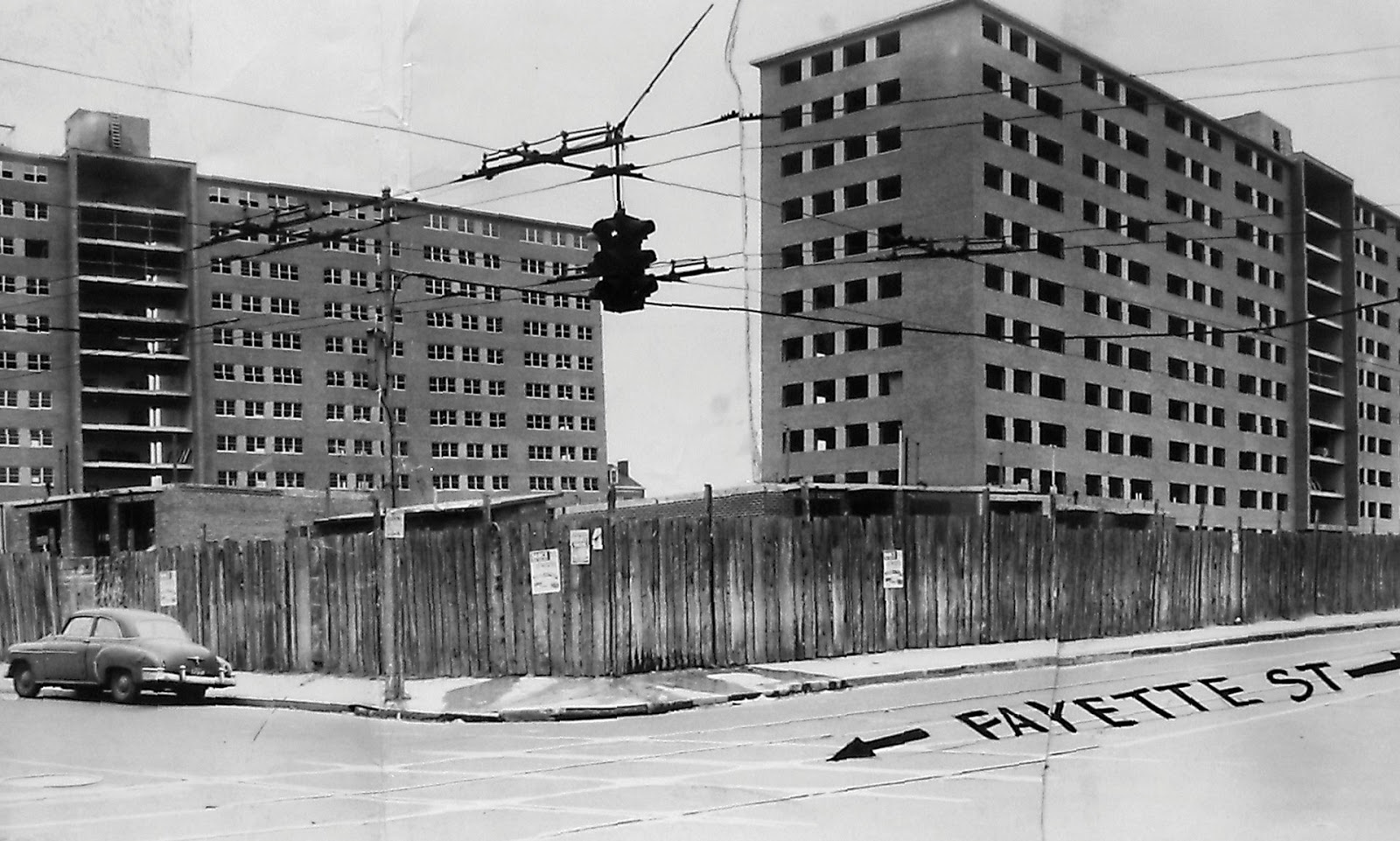
Housing projects like this one in Baltimore, Maryland, can condemn residents to lives of poverty. 


Natalie Y Moore London Guardian

After the shooting of Philando Castile in Minnesota last Wednesday, the state’s appalled governor, Mark Dayton, said police wouldn’t have killed Castile if he had been white. Here’s a white politician recognising racism and not swatting it away like a pesky mosquito. But we need to recognise that a rigged, racist system of police brutality is indicative of deep-seated institutionalised racism.
Many of our cities are defined by entrenched residential segregation that created black ghettos and continues to perpetuate inequity. This was not by accident. In the 20th century, the government created housing policies that discriminated against black people and favoured white people in terms of wealth building. Despite the idea of “separate but equal” being struck down by our courts, the ideology still lingers in housing and public education. This isn’t about hokey ideas of harmony, of black and white people smiling and getting along just for the sake of getting along. Instead, if we start to address segregationist policies, we may have some hope of creating fairness.
"" frameborder="0" marginwidth="0" marginheight="0" scrolling="no" style="border: 0px currentColor; border-image: none; vertical-align: bottom;""" frameborder="0" marginwidth="0" marginheight="0" scrolling="no" style="border: 0px currentColor; border-image: none; vertical-align: bottom; display: none; visibility: hidden;" 
After racial uprisings in US cities in the 1960s, the Kerner Commission released a report, which asserted that our country was moving towards two societies: one black, one white, separate and unequal. The report said: “Segregation and poverty have created in the racial ghetto a destructive environment totally unknown to white Americans. What white Americans have never fully understood – but the Negro can never forget – is that white society is deeply implicated in the ghetto. White institutions created it, white institutions maintain it and white society condones it.”
These words still ring true today.
Police brutality isn’t isolated from other forms of racism. Segregation is about division, disinvestment and uneven resources based on race. In policing, we often see white officers who grew up in homogenous white places placed in black urban settings. These officers enter without understanding racial and cultural differences. It’s a set-up for failure.
Segregation isn’t about choosing to live among like-minded or racially similar people. American segregation is historic and intentional and must be a part of any conversation on race as the root of many of our problems. It looks like unemployment, boarded-up buildings, foreclosures, lackadaisical enforcement of fair housing laws, predatory lending, vacant land and troubled schools. Black homes in black neighbourhoods are valued less than white homes in white neighbourhoods for no other reason than skin colour. This then undermines how one builds wealth through home-ownership and reflects a race-based, not class-based, system.

Addressing segregation means disrupting the patterns of inequity by creating more housing and job choices. It’s ensuring that all resources and benefits are equally distributed in American society.
Some sources of authority are beginning to recognise this. What (happily) surprised me about a recent report into police accountability – it covered Chicago, but its findings and recommendations could apply more widely – was that it didn’t tout midnight basketball between youth and officers as a way to rebuild trust. It dug deeper by acknowledging racism: more black people shot by police officers than white people in the city (74% v 8%), and it called on politicians to implement programmes addressing housing segregation, poverty and systemic racism.
I quote from its impressive words. “Both informal and formal local and national laws and policies have been identified as factors in contributing to racial and economic segregation, including discriminatory housing policies, barriers to healthcare services, inequity in the criminal justice system and unbalanced public school funding. In effect, these longstanding practices have resulted in the creation and preservation of poor and isolated neighborhoods where minorities have been denied equal socioeconomic opportunity. The impact of these policies persists today, and the cumulative effects of poverty and isolation make it extremely difficult to break the cycle of poverty.”
Changing policies and laws is easier than changing people’s misperceptions and stereotypes. There’s no denying that. But to ensure a just society, we must start somewhere. The former is a good place to start.

Natalie Y Moore is the author of The South Side: A Portrait of Chicago and American Segregation

Saturday, July 09, 2016

Shootings Further Divide a Nation Torn Over Race

By TIMOTHY WILLIAMS and MICHAEL WINES NY TIMES


First came the cellphone video of an African-American man being fatally shot by a Louisiana police officer, and the astonishing live feed of a Minnesota woman narrating the police killing of her African-American boyfriend during a traffic stop. Then came the horrific live television coverage of police officers being gunned down by a sniper at a march protesting the police shootings.
And suddenly, the panoply of fears and resentments that have made this a foreboding summer had been brought into sharp relief.
Police accountability and racial bias have been at the center of the civic debate since August 2014, when a black teenager was killed by a white officer in Ferguson, Mo., a suburb of St. Louis. Mass murders in Newtown, Conn.; Charleston, S.C.; Orlando, Fla., and too many other locales have revived gun violence as a social issue and national shame. Both black anger at police killings and the boiling frustrations of some whites who feel they are ceding their long-held place in society have been constant undercurrents in politics since January and the Iowa presidential caucuses.
Now, in the space of three days, the killings of two black men by Louisiana and Minnesota police officers and the retaliatory murders of five Dallas officers, this time by a black Army veteran, have coalesced all those concerns into a single expression of national angst. In the midst of one of the most consequential presidential campaigns in memory, those convulsive events raised the prospect of still deeper divides in a country already torn by racial and ideological animus.
Since the Thursday night sniper attack the national conversation has swung between bitterness and despair over seemingly unbridgeable gulfs in society. The New York Post’s front page blared “CIVIL WAR.” The Drudge Report warned in a headline that “Black Lives Kill.” Some Minnesota protesters on Thursday night chanted, “Kill the police.”
Police officers and sociologists alike say that racial tension is approaching a point last seen during the street riots that swept urban American in the late 1960s when disturbances erupted in places like the Los Angeles neighborhood of Watts and Detroit and Newark, during summers of deep discontent.
“Even in the 1960s and 1970s, when there was a lot of tension around policing and civil rights and the antiwar movement, we’d never seen anything like what happened in Dallas,” said Darrel W. Stephens, the executive director of the Major Cities Chiefs Association and an instructor at the Public Safety Leadership Program in the School of Education at Johns Hopkins University.
Mr. Stephens and other police officials said that departments were increasingly schooling officers in ways to avoid and defuse violent encounters with minorities. But other experts said the parade of cellphone videos depicting shootings of black men have only reinforced African-Americans’ conviction that little has changed in six decades.

“There is a constant bombardment of images of brutality against African-Americans, and not just brutality, but state-sponsored brutality,” said Paul Butler, a former federal prosecutor and a law professor at Georgetown University Law Center. This week’s videos, he said, were particularly devastating. “It’s visceral,” he said. “It hits you in the gut. It’s emotional and graphic, so it makes you feel worse.”
There are some parallels today to the 1960s. Those riots were largely touched off by violent encounters between blacks and the police. Scholars say and statistics show that attacks on police officers became an increasingly frequent African-American response to decades of inequality and mistreatment at that time.
The Kerner Commission, established by President Lyndon B. Johnson, reported in 1968 that “Our nation is moving toward two societies, one black, one white — separate but unequal.” And a white backlash became a driving force in the presidential campaign that year that saw a tough-talking Republican, Richard M. Nixon, end eight years of Democratic rule.
Whether this week’s violence presages a repeat of that history is, of course, an unknown, as the nation’s first black president nears the end of two terms in office and the two political parties move toward their national conventions this month.
But racial tensions are clearly rising. A June survey by the Pew Research Center found that only 46 percent of whites surveyed thought that race relations were generally good, a sharp drop from the 66 percent who held that opinion in June 2009, shortly after Mr. Obama took office. For blacks, the corresponding decline — to 34 percent last month from 59 percent in 2009 — was even steeper.
The same Pew survey found that about three-quarters of African-Americans thought that blacks in their communities were treated less fairly by the police than were whites; a bare 35 percent of whites felt the same.
In the hours after the Dallas ambush, stunned officials and civic leaders pleaded for citizens to repair the rips in the nation’s social fabric.
“Our profession is hurting,” said the Dallas police chief, David O. Brown, who is African-American. “Dallas officers are hurting. We are heartbroken. There are no words to describe the atrocity that occurred to our city. All I know is that this must stop, this divisiveness between our police and our citizens.”
The Rev. Bryan Carter echoed him at a Friday memorial service for the fallen officers, saying: “We refuse to hate each other. We commit to pray together.”

President Obama, speaking on Friday from Warsaw, where he was attending a two-day NATO summit meeting, said of the police, “Today is a wrenching reminder of the sacrifices they make for us.” He called the attack a “vicious, calculated and despicable attack on law enforcement.”

In a presidential race in which racial and ethnic divisions have become an issue, both Hillary Clinton and Donald J. Trump canceled political events on Friday. Mr. Trump called the events in Texas “an attack on our country.”
“It is a coordinated, premeditated assault on the men and women who keep us safe,” Mr. Trump said in a statement. “We must restore law and order.”
Mrs. Clinton wrote on Twitter on Friday, “I mourn for the officers shot while doing their sacred duty to protect peaceful protesters, for their families and all who serve with them.”
But on social media, there were salutes to the sniper, blame of the news media for dividing the nation, charges that black protesters had spread hysteria, calls for love, fear of civil war and laments that the country is headed toward an unbridgeable divide.
Some activists said their movement would press on, demanding that the police be accountable. Aislinn Sol, a Black Lives Matter organizer in Chicago, said, “The disproportionate state-sponsored violence against African-Americans has not changed,” adding, “What we have seen is a change in the response.”
In interviews, a number of police officials said that they believed the only lasting solution to the violence and division was to end the glaring inequalities that fuel them, but that they saw little hope for that.
“We’re the most heavily armed violent society in the history of Western civilization and we dump this duty on 25-year-olds” in police departments, Ed Flynn, the police chief in Milwaukee, said in an interview before Thursday’s killings. “The problem for American policing is we’re learning the hard way that our political establishment finds it far easier to develop a constituency at the expense of our police than to solve these social problems.”
Perhaps it was Attorney General Loretta E. Lynch who captured the day’s mood. “This has been a week of profound grief and heartbreaking loss,” she said on Friday. “After the events of this week, Americans across our country are feeling a sense of helplessness, of uncertainty and of fear.”
“We must reject the easy impulses of bitterness and rancor,” she added, “and embrace the difficult work — but the important work, the vital work — of finding a path forward together.”

Saturday, June 25, 2016


Casual Sex: Everyone Is Doing It


By Maria Konnikova The New Yorker


 As a research project, part society devoted to titillation, the Casual Sex Project reminds us that hookups aren't just for college students. Illustration by Wren McDonald

Zhana Vrangalova had hit a problem. On a blustery day in early spring, sitting in a small coffee shop near the campus of New York University, where she is an adjunct professor of psychology, she was unable to load onto her laptop the Web site that we had met to discuss. This was not a technical malfunction on her end; rather, the site had been blocked. Vrangalova, who is thirty-four, with a dynamic face framed by thick-rimmed glasses, has spent the past decade researching human sexuality, and, in particular, the kinds of sexual encounters that occur outside the norms of committed relationships. The Web site she started in 2014, casualsexproject.com, began as a small endeavor fuelled by personal referrals, but has since grown to approximately five thousand visitors a day, most of whom arrive at the site through organic Internet searches or referrals through articles and social media. To date, there have been some twenty-two hundred submissions, about evenly split between genders, each detailing the kinds of habits that, when spelled out, can occasionally alert Internet security filters. The Web site was designed to open up the discussion of one-night stands and other less-than-traditional sexual behaviors. What makes us engage in casual sex? Do we enjoy it? Does it benefit us in any way—or, perhaps, might it harm us? And who, exactly, is “us,” anyway?
Up to eighty per cent of college students report engaging in sexual acts outside committed relationships—a figure that is usually cast as the result of increasingly lax social mores, a proliferation of alcohol-fuelled parties, and a potentially violent frat culture. Critics see the high rates of casual sex as an “epidemic” of sorts that is taking over society as a whole. Hookup culture, we hear, is demeaning women and wreaking havoc on our ability to establish stable, fulfilling relationships.
These alarms have sounded before. Writing in 1957, the author Nora Johnson raised an eyebrow at promiscuity on college campuses, noting that “sleeping around is a risky business, emotionally, physically, and morally.” Since then, the critiques of casual sexual behavior have only proliferated, even as society has ostensibly become more socially liberal. Last year, the anthropologist Peter Wood went so far as to call the rise of casual sex “an assault on human nature,” arguing in an article in the conservative Weekly Standard that even the most meaningless-seeming sex comes with a problematic power imbalance.
Others have embraced the commonness of casual sex as a sign of social progress. In a widely read Atlantic article from 2012, “Boys on the Side,” Hanna Rosin urged women to avoid serious suitors so that they could focus on their own needs and careers. And yet, despite her apparent belief in the value of casual sex as a tool of exploration and feminist thinking, Rosin, too, seemed to conclude that casual sex cannot be a meaningful end goal. “Ultimately, the desire for a deeper human connection always wins out, for both men and women,” she wrote.
The Casual Sex Project was born of Vrangalova’s frustration with this and other prevalent narratives about casual sex. “One thing that was bothering me is the lack of diversity in discussions of casual sex,” Vrangalova told me in the café. “It’s always portrayed as something college students do. And it’s almost always seen in a negative light, as something that harms women.”
It was not the first time Vrangalova had wanted to broaden a limited conversation. As an undergraduate, in Macedonia, where she studied the psychology of sexuality, she was drawn to challenge cultural taboos, writing a senior thesis on the development of lesbian and gay sexual attitudes. In the late nineties, Vrangalova started her research on casual sex in Cornell’s developmental-psychology program. One study followed a group of six hundred and sixty-six freshmen over the course of a year, to see how engaging in various casual sexual activities affected markers of mental health: namely, depression, anxiety, life satisfaction, and self-esteem. Another looked at more than eight hundred undergraduates to see whether individuals who engaged in casual sex felt more victimized by others, or were more socially isolated. (The results: yes to the first, no to the second.) The studies were intriguing enough that Vrangalova was offered an appointment at N.Y.U., where she remains, to further explore some of the issues surrounding the effects of nontraditional sexual behaviors on the individuals who engage in them.
Over time, Vrangalova came to realize that there was a gap in her knowledge, and, indeed, in the field as a whole. Casual sex has been much explored in psychological literature, but most of the data captured by her research team—and most of the other experimental research she had encountered—had been taken from college students. (This is a common problem in psychological research: students are a convenient population for researchers.) There has been the occasional nationally representative survey, but rigorous data on other subsets of the population is sparse. Even the largest national study of sexual attitudes in the United States, which surveyed a nationally representative sample of close to six thousand men and women between the ages of fourteen and ninety-four, neglected to ask respondents how many of the encounters they engaged in could be deemed “casual.”
From its beginnings, sex research has been limited by a social stigma. The field’s pioneer, Alfred Kinsey, spent decades interviewing people about their sexual behaviors. His books sold, but he was widely criticized for not having an objective perspective: like Freud before him, he believed that repressed sexuality was at the root of much of social behavior, and he often came to judgments that supported that view—even when his conclusions were based on less-than-representative surveys. He, too, used convenient sample groups, such as prisoners, as well as volunteers, who were necessarily comfortable talking about their sexual practices.
In the fifties, William Masters and Virginia Johnson went further, inquiring openly into sexual habits and even observing people in the midst of sexual acts. Their data, too, was questioned: Could the sort of person who volunteers to have sex in a lab tell us anything about the average American? More troubling still, Masters and Johnson sought to “cure” homosexuality, revealing a bias that could easily have colored their findings.
Indeed, one of the things you quickly notice when looking for data on casual sex is that, for numbers on anyone who is not a college student, you must, for the most part, look at studies conducted outside academia. When OkCupid surveyed its user base, it found that between 10.3 and 15.5 per cent of users were looking for casual sex rather than a committed relationship. In the 2014 British Sex Survey, conducted by the Guardian, approximately half of all respondents reported that they had engaged in a one-night stand (fifty-five per cent of men, and forty-three per cent of women), with homosexuals (sixty-six per cent) more likely to do so than heterosexuals (forty-eight per cent). A fifth of people said they’d slept with someone whose name they didn’t know.
With the Casual Sex Project, Vrangalova is trying to build a user base of stories that she hopes will, one day, provide the raw data for academic study. For now, she is listening: letting people come to the site, answer questions, leave replies. Ritch Savin-Williams, who taught Vrangalova at Cornell, told me that he was especially impressed by Vrangalova’s willingness “to challenge traditional concepts and research designs with objective approaches that allow individuals to give honest, thoughtful responses.”
The result is what is perhaps the largest-ever repository of information about casual-sex habits in the world—not that it has many competitors. The people who share stories range from teens to retirees (Vrangalova’s oldest participants are in their seventies), and include city dwellers and suburbanites, graduate-level-educated professionals (about a quarter of the sample) and people who never finished high school (another quarter). The majority of participants aren’t particularly religious, although a little under a third do identify as at least “somewhat” religious. Most are white, though there are also blacks, Latinos, and other racial and ethnic groups. Initially, contributions were about sixty-per-cent female, but now they’re seventy-per-cent male. (This is in line with norms; men are “supposed” to brag more about sexual exploits than women.) Anyone can submit a story, along with personal details that reflect his or her demographics, emotions, personality traits, social attitudes, and behavioral patterns, such as alcohol intake. The setup for data collection is standardized, with drop-down menus and rating scales.
Still, the site is far from clinical. The home page is a colorful mosaic of squares, color-coded according to the category of sexual experience (blue: “one-night stand”; purple: “group sex”; gray: the mysterious-sounding “first of many”; and so on). Pull quotes are highlighted for each category (“Ladies if you haven’t had a hot, young Latino stud you should go get one!”). Many responses seem to boast, provoke, or exaggerate for rhetorical purposes. Reading it, I felt less a part of a research project than a member of a society devoted to titillation.
Vrangalova is the first to admit that the Casual Sex Project is not what you would call an objective, scientific approach to data collection. There is no random assignment, no controls, no experimental conditions; the data is not representative of the general population. The participants are self-selecting, which inevitably colors the results: if you’re taking the time to write, you are more likely to write about positive experiences. You are also more likely to have the sort of personality that comes with wanting to share details of your flings with the public. There is another problem with the Casual Sex Project that is endemic in much social-science research: absent external behavioral validation, how do we know that respondents are reporting the truth, rather than what they want us to hear or think we want them to say?
And yet, for all these flaws, the Casual Sex Project provides a fascinating window into the sexual habits of a particular swath of the population. It may not be enough to draw new conclusions, but it can lend nuance to assumptions, expanding, for instance, ideas about who engages in casual sex or how it makes them feel. As I browsed through the entries after my meeting with Vrangalova, I came upon the words of a man who learned something new about his own sexuality during a casual encounter in his seventies: “before this I always said no one can get me of on a bj alone, I was taught better,” he writes. As a reflection of the age and demographic groups represented, the Casual Sex Project undermines the popular narrative that casual sex is the product of changing mores among the young alone. If that were the case, we would expect there to be a reluctance to engage in casual sex among the older generations, which grew up in the pre-“hookup culture” era. Such reluctance is not evident.
The reminder that people of all ages engage in casual sex might lead us to imagine three possible narratives. First, that perhaps what we see as the rise of a culture of hooking up isn’t actually new. When norms related to dating and free love shifted, in the sixties, they never fully shifted back. Seventy-year-olds are engaging in casual encounters because that attitude is part of their culture, too.
There’s another, nearly opposite explanation: casual sex isn’t the norm now, and wasn’t before. There are simply always individuals, in any generation, who seek sexual satisfaction in nontraditional confines.
And then there’s the third option, the one that is most consistent with the narrative that our culture of casual sex begins with college hookups: that people are casually hooking up for different reasons. Some young people have casual sex because they feel they can’t afford not to, or because they are surrounded by a culture that says they should want to. (Vrangalova’s preliminary analysis of the data on her site suggests that alcohol is much more likely to be involved in the casual-sex experiences of the young than the old.) And the old—well, the old no longer care what society thinks. For some, this sense of ease might come in their thirties; for others, their forties or fifties; for others, never, or not entirely.
This last theory relates to another of Vrangalova’s findings—one that, she confesses, came as a surprise when she first encountered it. Not all of the casual-sex experiences recorded on the site were positive, even among what is surely a heavily biased sample. Women and younger participants are especially likely to report feelings of shame. (“I was on top of him at one point and he can’t have forced me to so I must have consented . . . I’m not sure,” an eighteen-year-old writes, reporting that the hookup was unsatisfying, and describing feeling “stressed, anxious, guilt and disgust” the day after.) There is an entire thread tagged “no orgasm,” which includes other occasionally disturbing and emotional tales. “My view has gotten a lot more balanced over time,” Vrangalova said. “I come from a very sex-positive perspective, surrounded by people who really benefitted from sexual exploration and experiences, for the most part. By studying it, I’ve learned to see both sides of the coin.”
Part of the negativity, to be sure, does originate in legitimate causes: casual sex increases the risk of pregnancy, disease, and, more often than in a committed relationship, physical coercion. But many negative casual-sex experiences come instead from a sense of social convention. “We’ve seen that both genders felt they were discriminated against because of sex,” Vrangalova told me. Men often feel judged by other men if they don’t have casual sex, and social expectations can detract from the experiences they do have, while women feel judged for engaging in casual experiences, rendering those they pursue less pleasurable.
Perhaps this should come as no surprise: the very fact that Vrangalova and others are seeking explanations for casual-sex behaviors suggests that our society views it as worthy of note—something aberrant, rather than ordinary. No one writes about why people feel the need to drink water or go to the bathroom, why eating dinner with friends is “a thing” or study groups are “on the rise.”
It is that sense of shame, ultimately, that Vrangalova hopes her project may help to address. As one respondent to a survey Vrangalova sent to users put it, “This has helped me feel okay about myself for wanting casual sex, and not feel ashamed or that what I do is wrong.” The psychologist James Pennebaker has found over several decades of work that writing about emotional experiences can act as an effective form of therapy, in a way that talking about those experiences may not. (I’m less convinced that there are benefits for those who use the site as a way to boast about their own experiences.) “Often there’s no outlet for that unless you’re starting your own blog,” Vrangalova points out. “I wanted to offer a space for people to share.”
That may well end up the Casual Sex Project’s real contribution: not to tell us something we didn’t already know, or at least suspect, but to make such nonjudgmental, intimate conversations possible. The dirty little secret of casual sex today is not that we’re having it but that we’re not sharing our experiences of it in the best way.

Monday, June 20, 2016

United States of Paranoia: They See Gangs of Stalkers

By MIKE McPHATE NY TIMES
 Timothy Trespas at his home in Brooklyn, where he now lives, last month. “I don’t really have any friends anymore. I’ve become so extremely isolated,” he said. Credit Jake Naughton for The New York Times
Nobody believed him. His family told him to get help. But Timothy Trespas, an out-of-work recording engineer in his early 40s, was sure he was being stalked, and not by just one person, but dozens of them.
He would see the operatives, he said, disguised as ordinary people, lurking around his Midtown Manhattan neighborhood. Sometimes they bumped into him and whispered nonsense into his ear, he said.
“Now you see how it works,” they would say.
At first, Mr. Trespas wondered if it was all in his head. Then he encountered a large community of like-minded people on the internet who call themselves “targeted individuals,” or T.I.s, who described going through precisely the same thing.
The group was organized around the conviction that its members are victims of a sprawling conspiracy to harass thousands of everyday Americans with mind-control weapons and armies of so-called gang stalkers. The goal, as one gang-stalking website put it, is “to destroy every aspect of a targeted individual’s life.”
"We are T.I.s."
A growing tribe of troubled minds
Mental health professionals say the narrative has taken hold among a group of people experiencing psychotic symptoms that have troubled the human mind since time immemorial. Except now victims are connecting on the internet, organizing and defying medical explanations for what’s happening to them.
The community, conservatively estimated to exceed 10,000 members, has proliferated since 9/11, cradled by the internet and fed by genuine concerns over government surveillance. A large number appear to have delusional disorder or schizophrenia, psychiatrists say.
Yet, the phenomenon remains virtually unresearched.
For the few specialists who have looked closely, these individuals represent an alarming development in the history of mental illness: thousands of sick people, banded together and demanding recognition on the basis of shared paranoias.
They raise money, hold awareness campaigns, host international conferences and fight for their causes in courts and legislatures.
Perhaps their biggest victory came last year, when believers in Richmond, Calif., persuaded the City Council to pass a resolution banning space-based weapons that they believe could be used for mind control. A similar lobbying effort is underway in Tucson.
An ‘echo chamber’ of paranoia
Dr. Lorraine Sheridan, who is co-author of perhaps the only study of gang-stalking, said the community poses a danger that sets it apart from other groups promoting troubling ideas, such as anorexia or suicide. On those topics, the internet abounds with medical information and treatment options.
An internet search for “gang-stalking,” however, turns up page after page of results that regard it as fact. “What’s scary for me is that there are no counter sites that try and convince targeted individuals that they are delusional,” Dr. Sheridan said.
“They end up in a closed ideology echo chamber,” she said.
In instructional tracts online, veterans of the movement explain the ropes to rookies:
• Do not engage with the voices in your head.
• If your relatives tell you you’re imagining things, they could be in on it.
The tribe cuts across all classes and professions, and includes lawyers, soldiers, artists and engineers. In Facebook forums and call-in support groups, they commiserate over the skepticism of their loved ones and share stories of black vans that circle the block or co-workers conscripted into the campaign.
 
 
A T.I. subgenre has blossomed on Amazon. Left, the cover of John Hall’s “Guinea Pigs: Technologies of Control,” and Robert Duncan’s “How to Tame a Demon.”
They have self-published dozens of e-books, with titles like “Tortured in America” and “My Life Changed Forever.” In hundreds of YouTube videos they offer testimonials and try to document evidence of their stalking, even confronting unsuspecting strangers.
“They wanted to basically destroy me, and they did,” a young mother in Phoenix says in one video, choking back tears. She lost custody of her daughter and was sent to a behavioral health hospital, says the woman, whose name is being withheld to protect her privacy. “But I am going to fight back for the rest of my life.”
She adds, “And guess what, I’m not crazy.”
Dr. Sheridan’s study, written with Dr. David James, a forensic psychiatrist, examined 128 cases of reported gang-stalking. It found all the subjects were most likely delusional.
“One has to think of the T.I. phenomenon in terms of people with paranoid symptoms who have hit upon the gang-stalking idea as an explanation of what is happening to them,” Dr. James said.
·A mishmash of conspiracy theories
·Perhaps unsurprisingly, the community is divided over the contours of the conspiracy. Some believe the financial elite is behind it. Others blame aliens, their neighbors, Freemasons or some combination.
·The movement’s most prominent voices, however, tend to believe the surveillance is part of a mind-control field test done in preparation for global domination. The military establishment, the theory goes, never gave up on the ambitions of MK Ultra, the C.I.A.’s infamous program to control the mind in the 1950s and ’60s.
·A leading proponent of that view is an anesthesiologist from San Antonio named John Hall.
·John Hall, an anesthesiologist in San Antonio, has been a leading voice of those who feel targeted. Credit Matthew Busch for The New York Times
·In his 2009 book, “A New Breed: Satellite Terrorism in America,” Mr. Hall gave his own account of being targeted. Agents bleached his water, he wrote, and bombarded him with voices making murderous threats.
·The book made a splash because of the messenger: a licensed member of the medical establishment who was telling those who feel targeted that psychiatrists were misleading them. A janitor knows as much about the human mind, he wrote.
·Mr. Hall, 51, was invited for an interview on “Coast to Coast AM,” a conspiracy-minded radio show based in California that is said to reach millions of listeners. After that, he said, “I had probably three or 4,000 emails from people saying: ‘It’s happening to me in this state.’ ‘It’s happening to me in Florida.’ ‘It’s happening to me in California.’ ”
·The similarities of the cases spoke to a wide-ranging campaign, he said. “If the psychiatrists want to say that this is schizophrenia or delusional disorder, that’s fine,” he said. “But every one of these victims have the same story.”
·Dr. Hall discusses gang stalking, psychiatry and MK Ultra.
·While Mr. Hall has faced scrutiny from the Texas Medical Board over his mental fitness, he retains his license. Over time, however, many others who identify as gang-stalking victims end up out of work. They are mocked by colleagues, tolerated by family. Friends and spouses fall away.
·A pretext for violence
·The despair that results has led some to lash out in violence.
·Many in the community, for example, are convinced that Aaron Alexis, who killed 12 people at the Washington Navy Yard in 2013, was a victim. Mr. Alexis, a former sailor, left behind a document accusing the Navy of attacking his brain with “extremely low frequency” electromagnetic waves. On the side of his shotgun were etched the words “my elf weapon.”
·It was unclear when Myron May’s mental distress began, but by the fall of 2014, it had become too much. He quit his job as a prosecutor in New Mexico and traveled to Florida. There, he videotaped a testimonial about how gang-stalking had ruined his life.
·“As you can see right now,” he says into the camera, “I am totally not crazy.”
 
·Myron May: "I'm what's called a targeted individual."
 
·Laying out his case, he describes an episode at a gas station where he believed somebody in dark glasses was mimicking his movements. “It was really creepy,” he said. “Everything I did, he did.”
·Later in the video, he prays for forgiveness for his future sins. “Father,” he says, “right now I ask that you look down on all the targeted individuals across the globe. Help them to cope with this madness.”
·On Nov. 20, 2014, Mr. May walked into a library at Florida State University, where he had graduated in 2005, and shot three people, leaving one paralyzed. He dared the police to kill him, then fired in their direction before being fatally shot, officials said. He was 31.
·The vast majority of people with psychosis never resort to violence. Still, studies suggest that a small number of those experiencing psychotic episodes — especially paranoid thoughts, accompanied by voices making commands — are more likely to act on hostile urges than people without a mental illness.
·Many in the T.I. community, as anyone would, have repudiated the shootings by Mr. Alexis and Mr. May. But some also harbor troubling views about their perceived oppressors. They question how people could be so cruel.
·Karen Stewart of Tallahassee, Fla., believes large numbers of regular people have been brainwashed by the National Security Agency into thinking that she is a traitor or terrorist. Wherever she goes, she says — to church, to the grocery store, to the doctor’s office — they are there, watching.
·It baffles her, she said. But worse, “It makes me angry to see how many people in this country are sociopaths. They are absolute groupthink drones,” she said. “I don’t even consider them human anymore.”
·‘A need for meaning’
·Susan Clancy, a Harvard-trained psychiatrist who has researched people who believe they’ve been abducted by aliens, said it could be extremely difficult to dissuade patients who have latched onto beliefs that they think explain their delusions.
·“I think it’s a need for meaning and a need to understand your life and the problems you’re having,” she said. “You’re not some meaningless nobody. You’re being followed by the C.I.A.”
·In that way, Dr. Clancy said, the behavior shares a trait with religious belief: To abandon it would be life upending.
·Paula Trespas, Mr. Trespas’s mother, said she avoided debating with him.
·“It wasn’t something that he was making up,” she said. “He really felt the way he felt and experienced what he experienced. I got to the point where I was just finally saying to him: ‘I’m very, very sad that you have to go through this. I wish that there was something that I could do.’ ”
·The big hope is that society will wake up to what’s happening and put a stop to it, those who feel targeted say. In some cases, they do seek psychiatric help. In others, the delusions subside. For the rest, the prognosis isn’t good, psychiatrists say. Many contemplate suicide.
·Mr. Trespas, now 49, says he went so far as to prepare a rope.
·Sitting at a coffee shop in Brooklyn last month, he says the stalking has thankfully quieted down. But he says his harassers have also been seeding his body with Morgellons, a painful, insectlike infestation of the skin that many doctors say is psychosomatic.
·He is gaunt, with weary, sad eyes. It’s been eight years since it all began, he says. He can’t hold a job. His friends have drifted away.
·The online community has been a crucial support, he says. “But we don’t know exactly what’s happening,” he says. “Maybe we’re believing the wrong thing. I don’t know. That’s why I try to keep my mind open about who and what and why and how.”
·One thing he is certain of though, he says: He’s not crazy.